At a glance
- Moroccan food is built on slow cooking, warm spices, preserved lemons, olives and fresh bread.
- Couscous is traditionally a Friday dish, shared after midday prayers.
- Tanjia is a Marrakech specialty, slow-cooked in the ashes of a hammam furnace.
- Street food is generally safe at busy stalls where food turns over quickly.
- Mint tea is a ritual of hospitality; accept a glass when it is offered.
Moroccan food draws on Amazigh, Arab, Andalusian and French traditions, and the best of it is cooked slowly at home. Couscous is so central to the region that it is listed by UNESCO as intangible cultural heritage, shared by Morocco, Algeria, Mauritania and Tunisia. Here are the dishes we tell every guest to try.
The main dishes
1. Tagine
Named for the conical clay pot it is cooked in, a tagine is a slow stew of meat, fish or vegetables. Classic versions include chicken with preserved lemon and olives, lamb with prunes and almonds, and kefta meatballs with eggs.
2. Couscous
Steamed semolina topped with seven vegetables and meat, traditionally eaten on Fridays after the midday prayer. Ask your riad if they will make it for you.
3. Pastilla
A thin, flaky pastry filled with spiced pigeon or chicken, almonds and eggs, dusted with cinnamon and sugar. The seafood version is just as good.
4. Tanjia
The Marrakech specialty: beef or lamb with preserved lemon, garlic, cumin and saffron, sealed in a clay urn and left to cook for hours in the ashes of a hammam furnace.
5. Mechoui
Whole lamb slow-roasted until it falls apart, eaten with salt and cumin. Look for the mechoui stalls near the souks in Marrakech at lunchtime.
6. Harira
A tomato, lentil and chickpea soup, served with dates and chebakia to break the fast during Ramadan and eaten year-round.
Salads and small plates
7. Zaalouk and taktouka
Cooked salads of smoky eggplant and of peppers and tomatoes, served with bread at the start of almost every meal.
8. Rfissa
Shredded msemen flatbread with chicken, lentils and fenugreek, a comforting dish made for celebrations and new mothers.
Tip
Eat with your right hand and use bread as your spoon. At a shared dish, eat from the section in front of you.
Street food and breakfast
9. Msemen, baghrir and sfenj
Square layered flatbreads, spongy semolina pancakes and fried rings of dough: Moroccan breakfast, served with honey, butter and amlou, a spread of argan oil, almonds and honey.
10. Snail soup and grilled skewers
At the Jemaa el-Fna stalls at night, try a bowl of snails in spiced broth and brochettes from the grill. Choose busy stalls where food turns over quickly. Our guide to things to do in Marrakech covers the night market.

Want to cook it yourself?
We arrange market visits and cooking classes in riad kitchens in Marrakech and Fes, with dinner at the end.
Sweets and drinks
11. Pastries
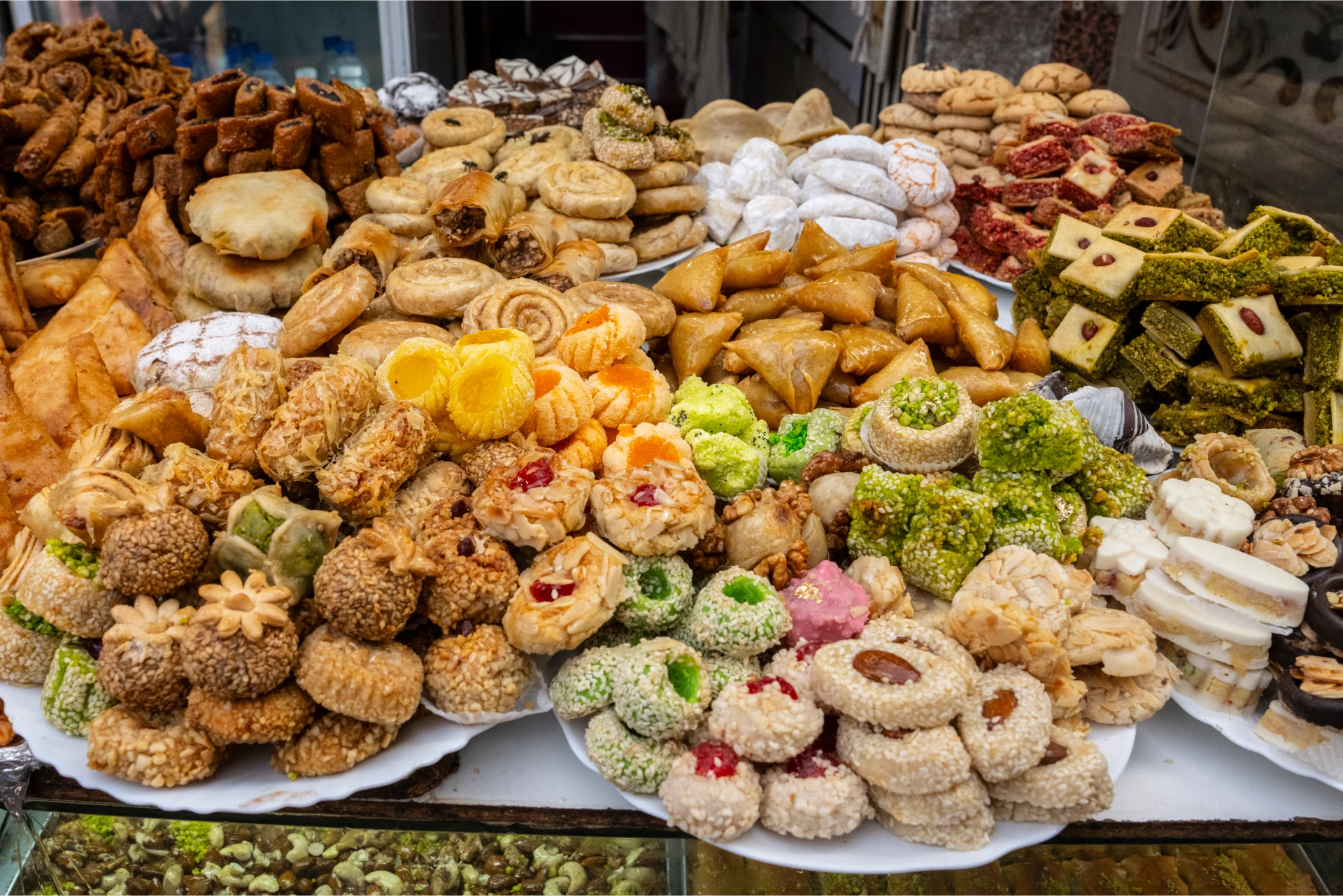
Kaab el ghazal, crescent pastries filled with almond paste, and chebakia, sesame flowers fried and soaked in honey, are the classics. Fes is known for its pastry shops.
12. Mint tea
Green tea with fresh mint and sugar, poured from a height to make a foam. It is offered as a sign of welcome, and accepting a glass is part of the conversation.
Where to eat well
The best meals are often in riads and family homes. Ask your hosts what they recommend. Moroccan cooking is also part of the Mediterranean diet listed by UNESCO. For more on eating in Fes, see our guide to things to do in Fes, and for dietary questions, read our Morocco trip planning guide.
Frequently asked questions
What is the most famous Moroccan dish?
Tagine and couscous are the best known. Pastilla and tanjia are close behind.
Is Moroccan food spicy?
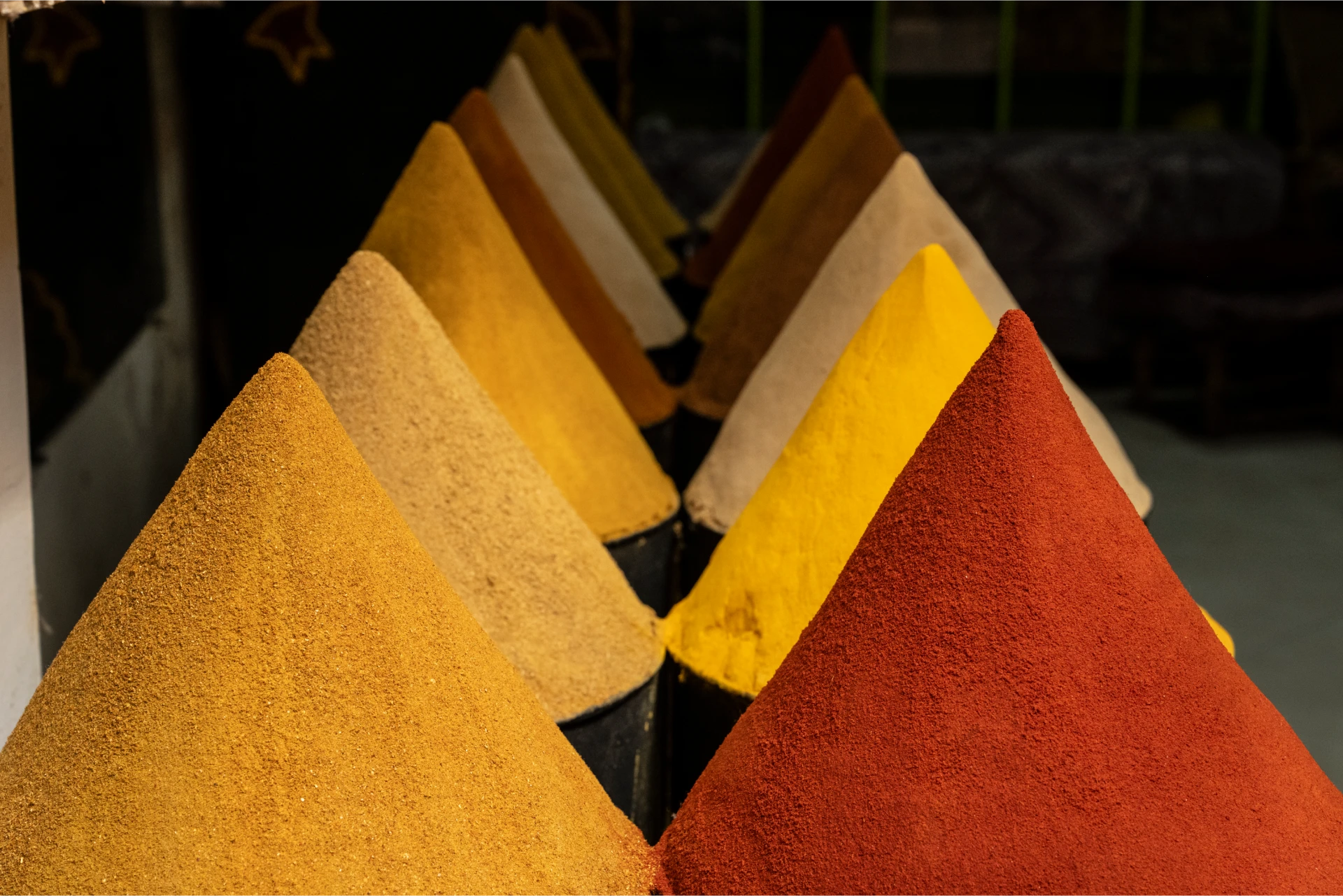
It is spiced rather than hot. Cumin, ginger, saffron, cinnamon and paprika are common; harissa is served on the side.
Is street food safe to eat in Morocco?
Generally yes at busy stalls where food is cooked fresh in front of you. Drink bottled water.
Can vegetarians eat well in Morocco?
Yes. Vegetable tagines and couscous, cooked salads, lentils and harira are easy to find. Ask for no meat stock.
Is alcohol available in Morocco?
Some hotels and restaurants serve it, but many riads and cafes do not. Ask us for places that do.
What is a typical Moroccan breakfast?
Msemen, baghrir, bread with olive oil, honey, amlou and fresh cheese, with mint tea or coffee.
When is couscous traditionally eaten?
On Fridays, after the midday prayer, shared with family.