At a glance
- Fes has been the capital of Moroccan calligraphy for nearly 1,300 years, since the founding of the Qarawiyyin in 859 CE.
- The Maghrebi script, rounded, generous, distinctly North African, is still taught by a handful of masters in the medina.
- A private workshop uses a hand-cut Atlas reed, lamp-black ink, and burnished aharshafi paper, three tools, no shortcuts.
- Sessions run about 2.5 hours and end with your own name written on signed paper you keep.
- The studio is not public; Anmoon arranges visits as part of a longer Fes stay.
Why Fes is still the heart of Moroccan calligraphy
Fes is nearly thirteen centuries old, and for most of those centuries it has been the intellectual capital of Morocco. The city's Qarawiyyin, founded in 859 CE and recognised as the oldest continuously operating university in the world, trained scholars who copied, studied and beautified the Arabic script long before the printing press crossed the Mediterranean. Calligraphy, in the Islamic tradition, is not decoration. It is the highest of the visual arts, because it carries the word.
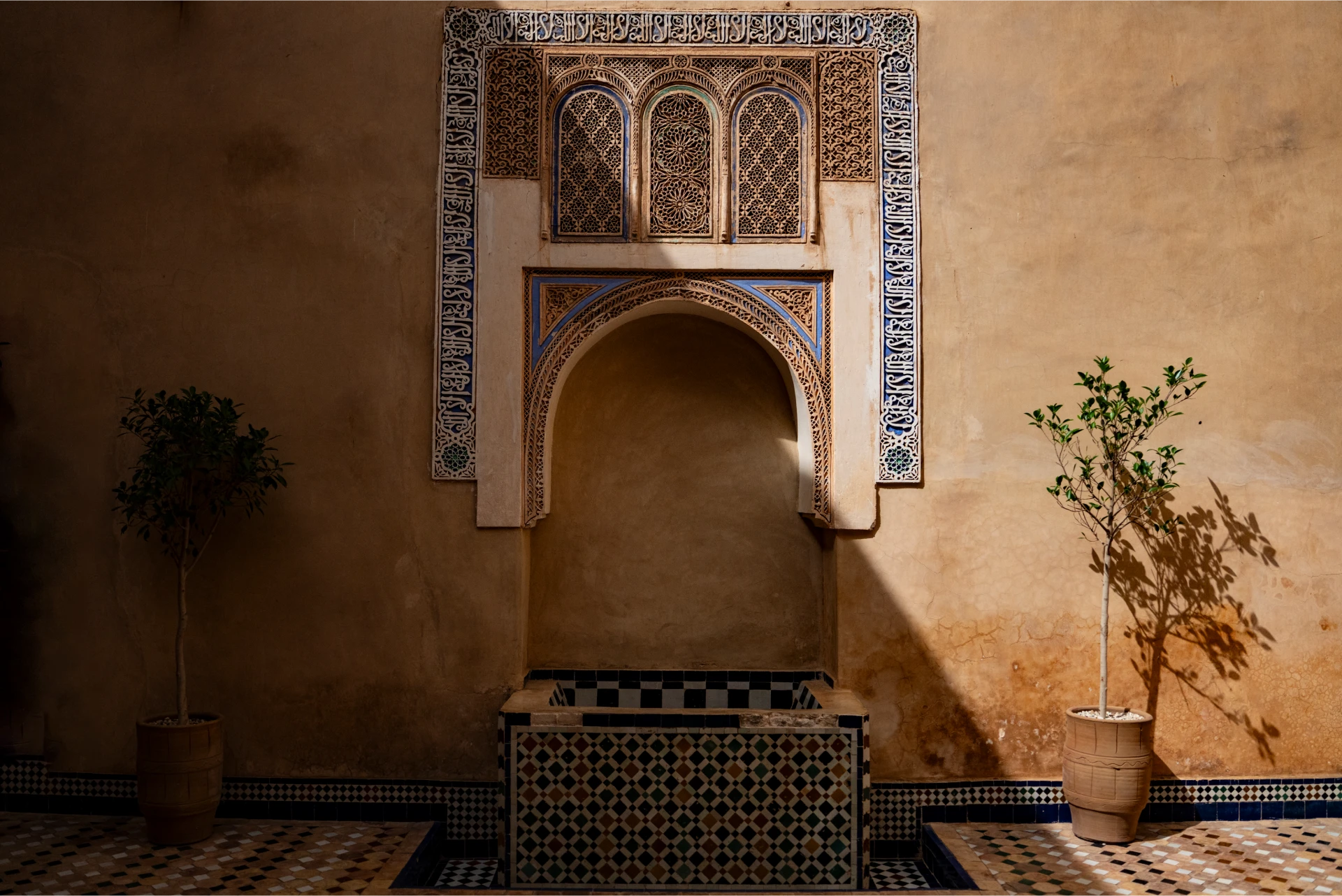
Walk the medina today and you will still find the evidence: Quranic verses carved into cedar above a fountain, a shopkeeper's sign painted in graceful Maghrebi thuluth, a wedding invitation written by hand because a printer could never do it justice. Fes is the city where Moroccan calligraphy, especially the distinctive, rounded Maghrebi script, is still taught by masters to a handful of chosen students, one reed at a time.
Meeting Mohammed, master of the Maghrebi script
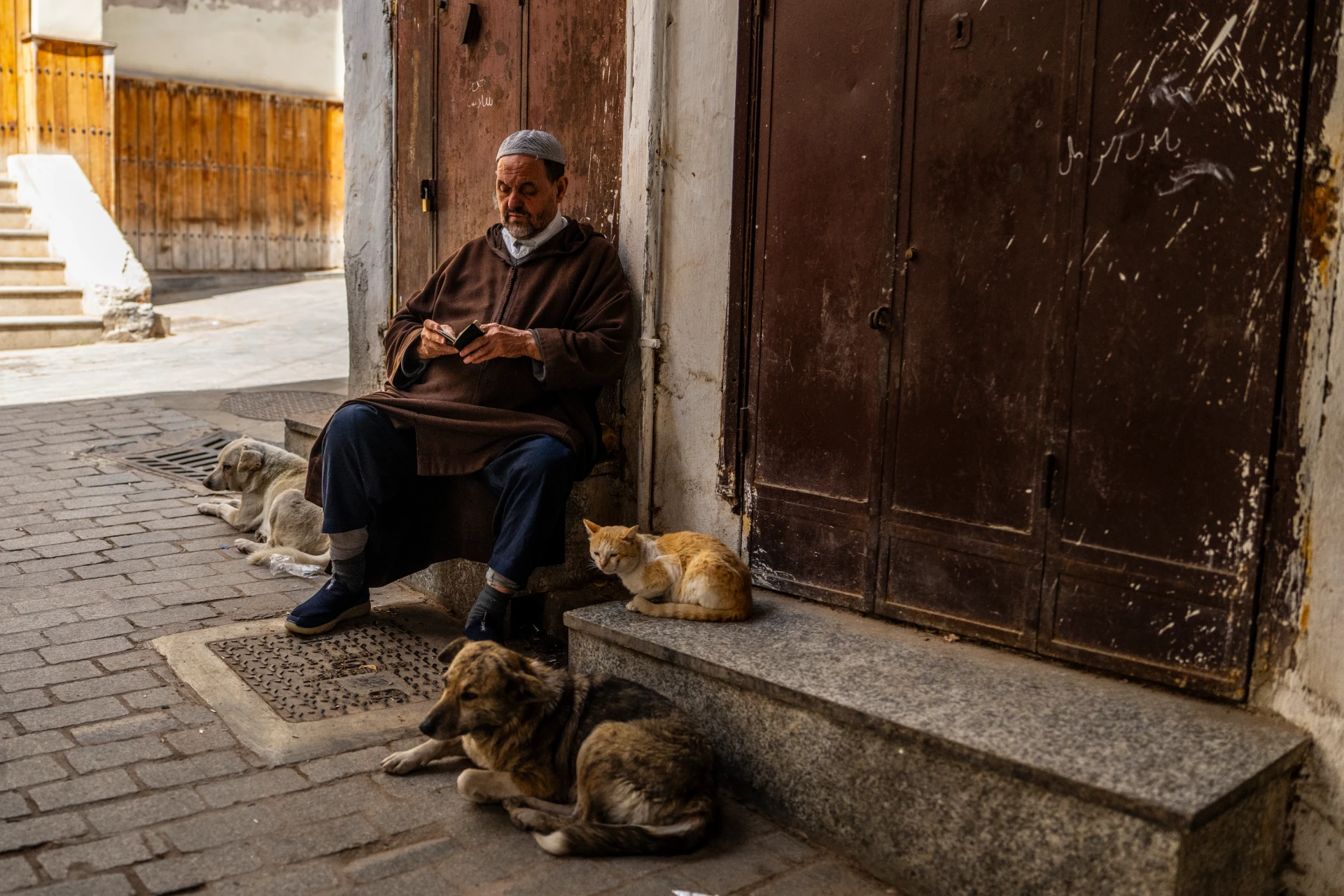
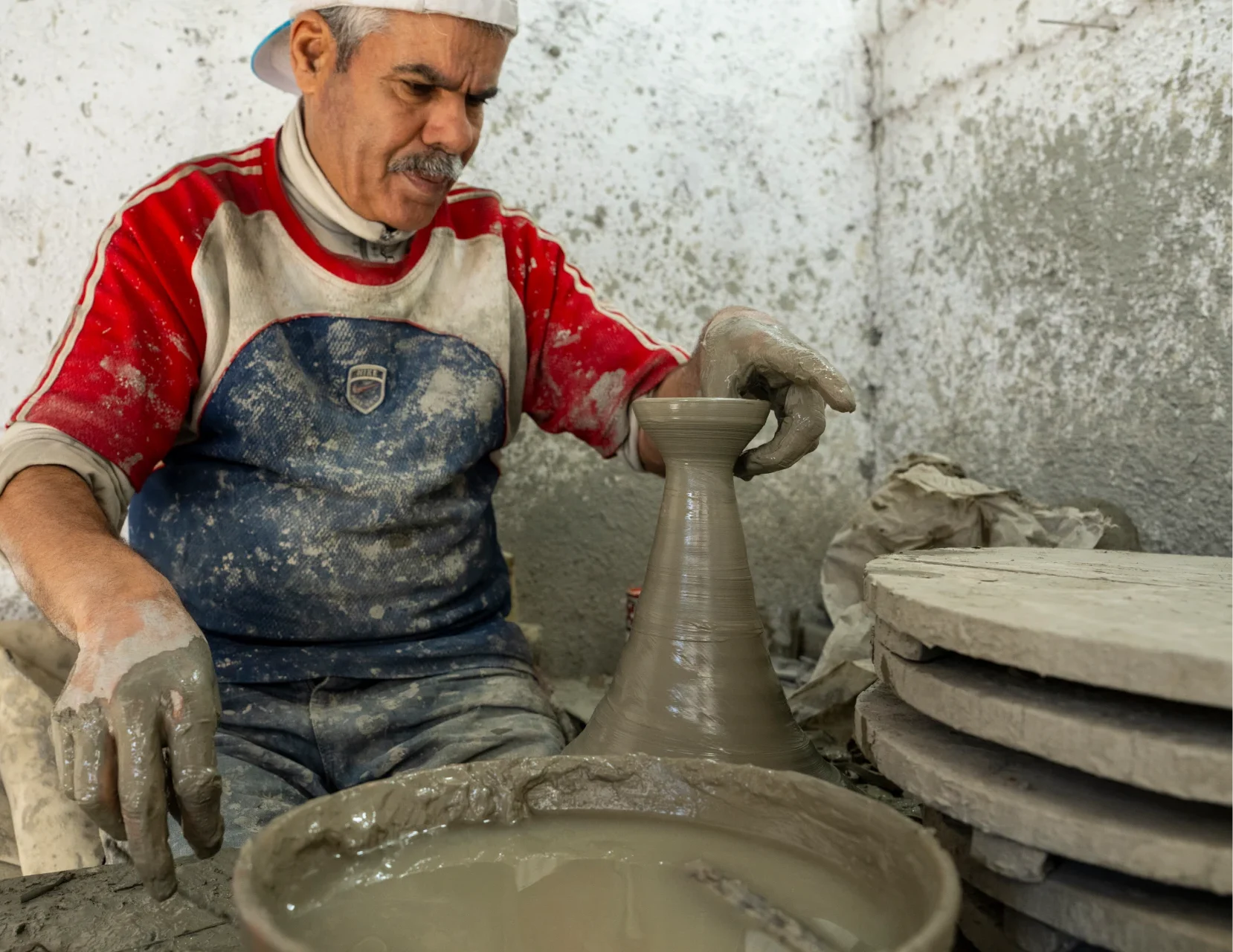
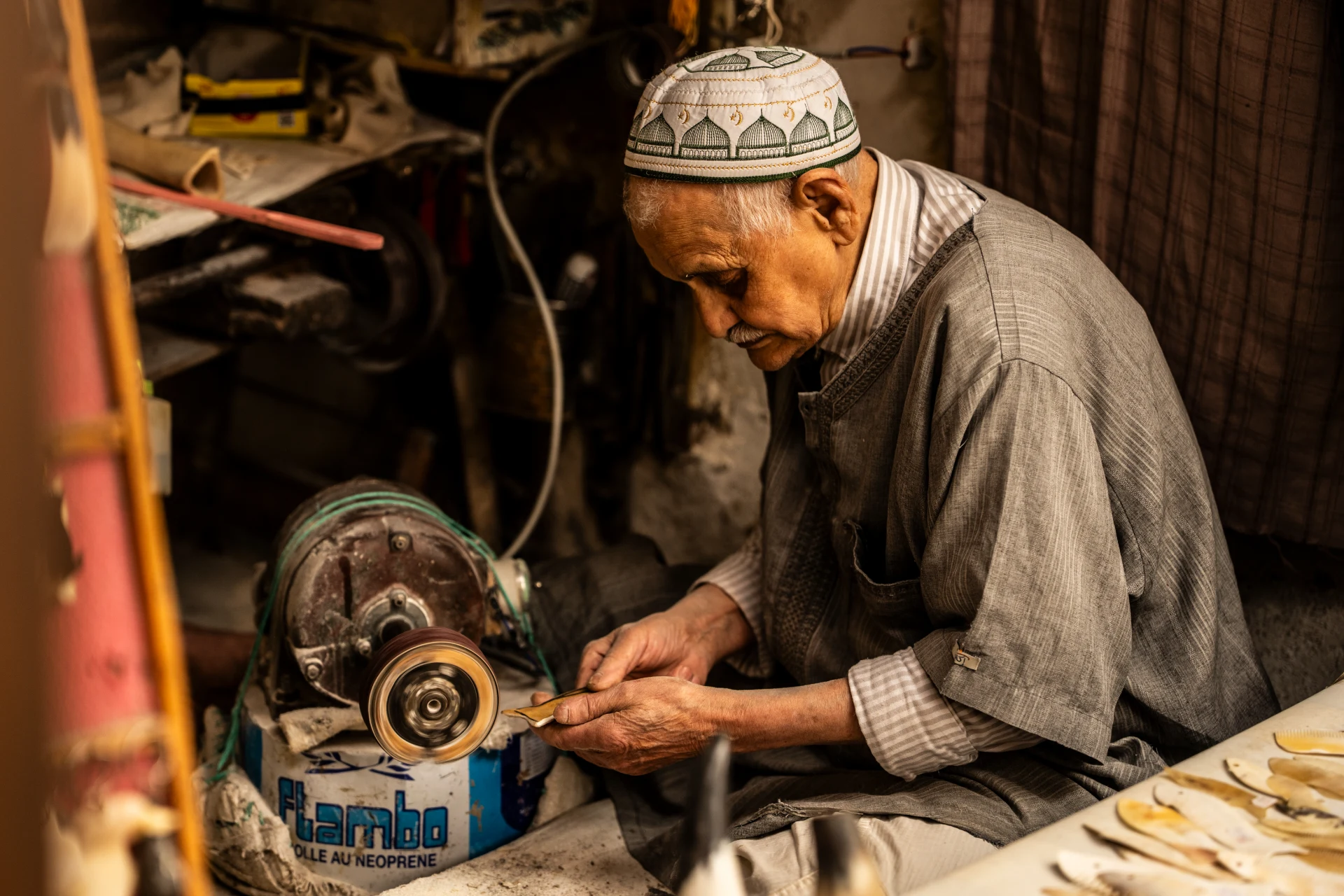
We introduce guests to Mohammed only in small numbers, and only in the morning, when the light comes soft through the single window of his studio and the medina has not yet grown loud. He is in his late sixties. He learned calligraphy from his grandfather, who learned from his, and so on back through a chain of teachers he can still name. He does not speak much English. He does not need to.
His studio is perhaps four meters square. One low table, two cushions, a shelf of hand-cut reeds, a row of inkwells in slow-drying clay, a stack of paper weighted by a river stone. On the wall above the table hangs a single panel, a verse from the Quran, written by his own master the year Mohammed was born. He glances at it the way some people glance at a photograph of a father.
The reed, the ink, the paper, the three quiet tools
The reed (qalam)
Moroccan calligraphers traditionally cut their own reeds, and Mohammed is no exception. Once or twice a year he drives into the High Atlas to find the right stands of cane, selects by feel, and carries a small bundle home wrapped in cloth. He cuts the nib with a tiny curved knife that has been in his family for three generations. A new nib takes him about forty minutes to shape. A good one lasts him weeks. A great one he may keep for months, and never lend.
The ink
The ink is made in the old way, lamp black mixed with gum arabic and a little honey, stirred and rested for days until it flows exactly as a thick drop of black silk. Mohammed's grandfather taught him to test it on the back of the hand: if it dries to a clean, slightly warm shadow, it is ready. If it beads or grays, it is not.
The paper
The finest calligraphy in Morocco is written on aharshafi, a burnished, egg-sized paper made by two workshops in Fes that still cure and polish each sheet by hand. It feels closer to vellum than to modern paper, and the reed glides across it without catching. Nothing else behaves the same way.
Tip
Bring a notebook. Most masters are happy for you to take home the practice sheets from your session.
Want a private session in Fes?
We arrange the workshop, a licensed guide to take you through the medina and a riad nearby.
What actually happens in a private calligraphy workshop
A morning session with Mohammed runs about two and a half hours. Tea is poured first, mint, of course, but strong and only lightly sweet. Then he demonstrates: a single letter, three times, at three different speeds, so that you see how the breath of the hand changes the shape of the line. He does not ask you to copy the word of God on your first try. He asks you to draw one letter, alif, the simplest and therefore the hardest, until your hand is quiet enough to hold it.
By the end of the morning, most guests have written their own name in Maghrebi script on a small square of aharshafi paper, which Mohammed signs and stamps with his personal seal. Some guests write a favorite short verse. Two or three, over the years, have asked to come back for a second session the next day. We have never refused that request.
How to experience this privately through Anmoon
Mohammed does not take walk-ins. His studio is not on any map, and he has no website, no Instagram, no telephone line open to strangers. We have worked with him for eleven years, and we introduce guests only on the morning of an Anmoon journey that includes Fes. There is no fixed fee, we ask for a contribution that goes directly to him, and to the small guild of three apprentices he teaches free of charge, which is the only way this craft survives.
If a morning with a master calligrapher sounds like the kind of moment that would make your Morocco, tell us when you write to plan your trip. We will weave it into a longer Fes stay, ideally with a traditional zellij workshop the same afternoon, and a private dinner in a historic riad that evening, so the day holds together like a single, quiet sentence.
A final word
People sometimes ask whether a morning in a calligrapher's studio is really worth the fuss of arranging. The answer is the same every time: you will not take many photographs, you will not buy anything large, you will not post about it immediately. But weeks after you are home, you will unroll the small square of paper with your name written on it, and you will remember, very precisely, how quiet the room was, and how the reed sounded when it first touched the page. That is Fes. That is why people fall in love with Morocco and never quite fall out.
The workshop fits easily into two days in the city; see our guide to things to do in Fes and our list of historical sites in Morocco. The medina of Fes is a UNESCO World Heritage Site, and the University of al-Qarawiyyin is at its heart. A morning like this one is part of our Imperial Threads journey.
Frequently asked questions
Do I need to speak Arabic to attend a Fes calligraphy workshop?
No. The master teaches through demonstration and gentle correction. An Anmoon guide translates where needed, but most of the lesson is in the hand, not in words.
How long does a private calligraphy session last?
A morning session is about two and a half hours, including mint tea, demonstration, guided practice, and the writing of your own name in Maghrebi script.
Is the workshop suitable for children?
Yes, for thoughtful children aged ten and up. Younger children find the stillness difficult, and we would rather save the experience for a later trip than rush it.
What should I wear to the medina workshop?
Comfortable, modest clothing, shoulders covered, and shoes you can slip off at the door. The studio is small and traditionally furnished.
Can I buy calligraphy directly from the master?
Yes. Mohammed keeps a small number of finished works for sale, and will sometimes accept commissions for a verse or a name in Maghrebi script, to be completed after you return home and shipped discreetly.
How do I book a Fes calligrapher workshop?
The studio is private and introductions are arranged only through Anmoon Travel, as part of a longer Morocco itinerary. Contact us through our planning form and we will include it in your Fes day.