At a glance
- Five of Morocco's nine UNESCO sites line up into one route: Rabat, Volubilis, Fes, Ait Ben Haddou and Marrakech.
- Plan ten to twelve nights to see them without rushing.
- Visit Volubilis and Ait Ben Haddou early or late in the day. Neither has shade.
- Spring and fall are the most comfortable seasons for a history-focused trip.
- A licensed guide makes the biggest difference in the Fes medina.
The historical sites in Morocco tell one continuous story, from a Roman frontier town to the palaces of the sultans, and they make the most sense seen in order. Most visitors meet the country through Marrakech and work backwards. We prefer to start in the north, where the story starts, and finish in Marrakech.
Below are the five places we would build that trip around, what to look for at each, and the route that links them with the fewest long drives.
Volubilis: Rome at the edge of the empire
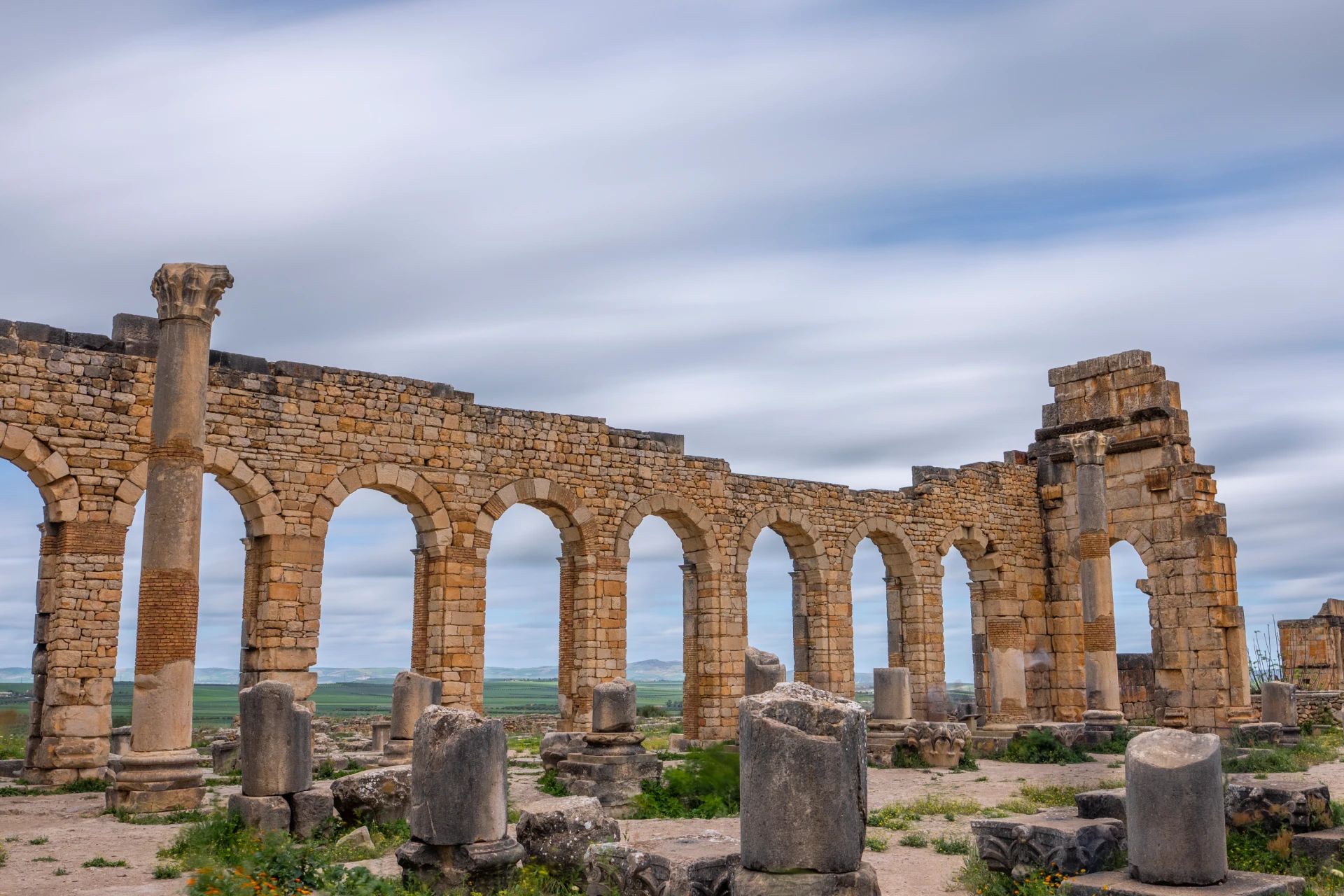
Volubilis sits in farmland below the Zerhoun hills, about 40 minutes north of Meknes. It was a Mauretanian capital before Rome annexed it in the 1st century AD, and it has been a UNESCO World Heritage Site since 1997.
The mosaics are still in place, on the floors where they were laid: Orpheus with his lyre, the labors of Hercules, dolphins and charioteers. The arches of the basilica and the triumphal arch of Caracalla stand against open sky, with no fences and few crowds.
Good to know
Arrive before 10 a.m. There is almost no shade on the site, and the low morning light is best on the triumphal arch. Combine it with the hilltop town of Moulay Idriss next door and lunch in Meknes, itself a UNESCO-listed imperial city.
Fes el-Bali: the medieval city that never stopped working
Fes was founded at the end of the 8th century, and its old city, Fes el-Bali, has been on the UNESCO list since 1981. The Al Quaraouiyine, founded in 859, is often described as the oldest continuously operating university in the world.
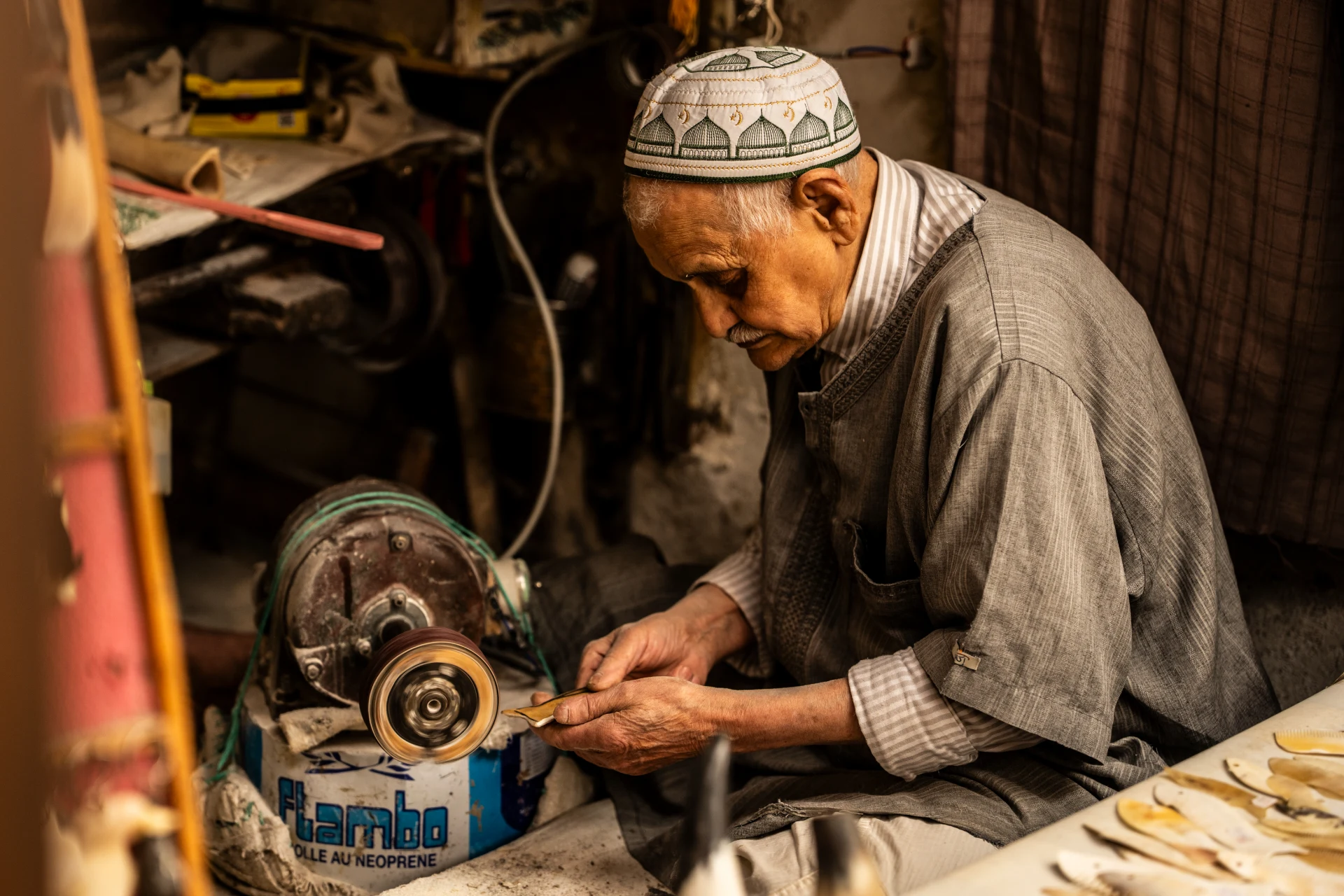
What surprises people is that nothing here is a museum. The Chouara tannery still dyes hides in stone vats. Coppersmiths still hammer trays in Place Seffarine. Calligraphers still cut their pens from reeds, as we saw on a morning with a Fes calligrapher.
Nothing in Fes is a museum. The tanneries, the coppersmiths and the university are all still at work.

Walk it with a licensed guide. The medina has thousands of lanes, and the history is in details you would otherwise pass without noticing: a carved cedar lintel, a fountain, a doorway into a madrasa courtyard.
Ait Ben Haddou: the kasbah Hollywood keeps returning to
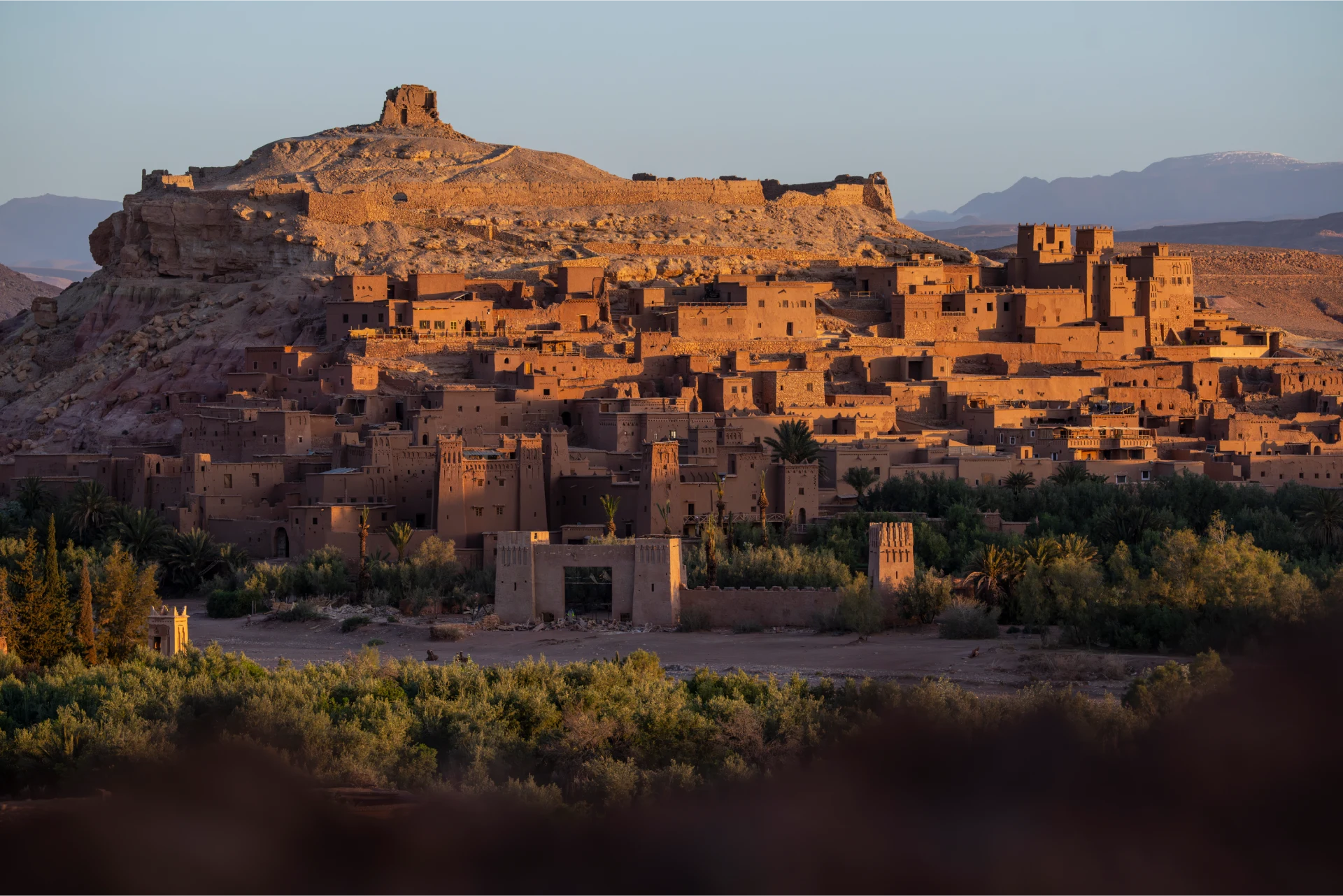
Ait Ben Haddou is a fortified earthen village, or ksar, on the old caravan route between the Sahara and Marrakech. It joined the UNESCO list in 1987. You have probably seen it already: it appears in Gladiator, Lawrence of Arabia and Game of Thrones, and the film studios in nearby Ouarzazate keep the crews coming.
Our advice is to stay the night nearby. Day-trippers from Marrakech arrive around midday. At sunset, and again at sunrise, the walls turn copper and you will have the ridge almost to yourself.
Want this route without the logistics?
Our Imperial Threads itinerary covers Rabat, Volubilis, Meknes and Fes in seven private days, and we can extend it south to Ait Ben Haddou and Marrakech.
Marrakech and Rabat: the dynasties in stone
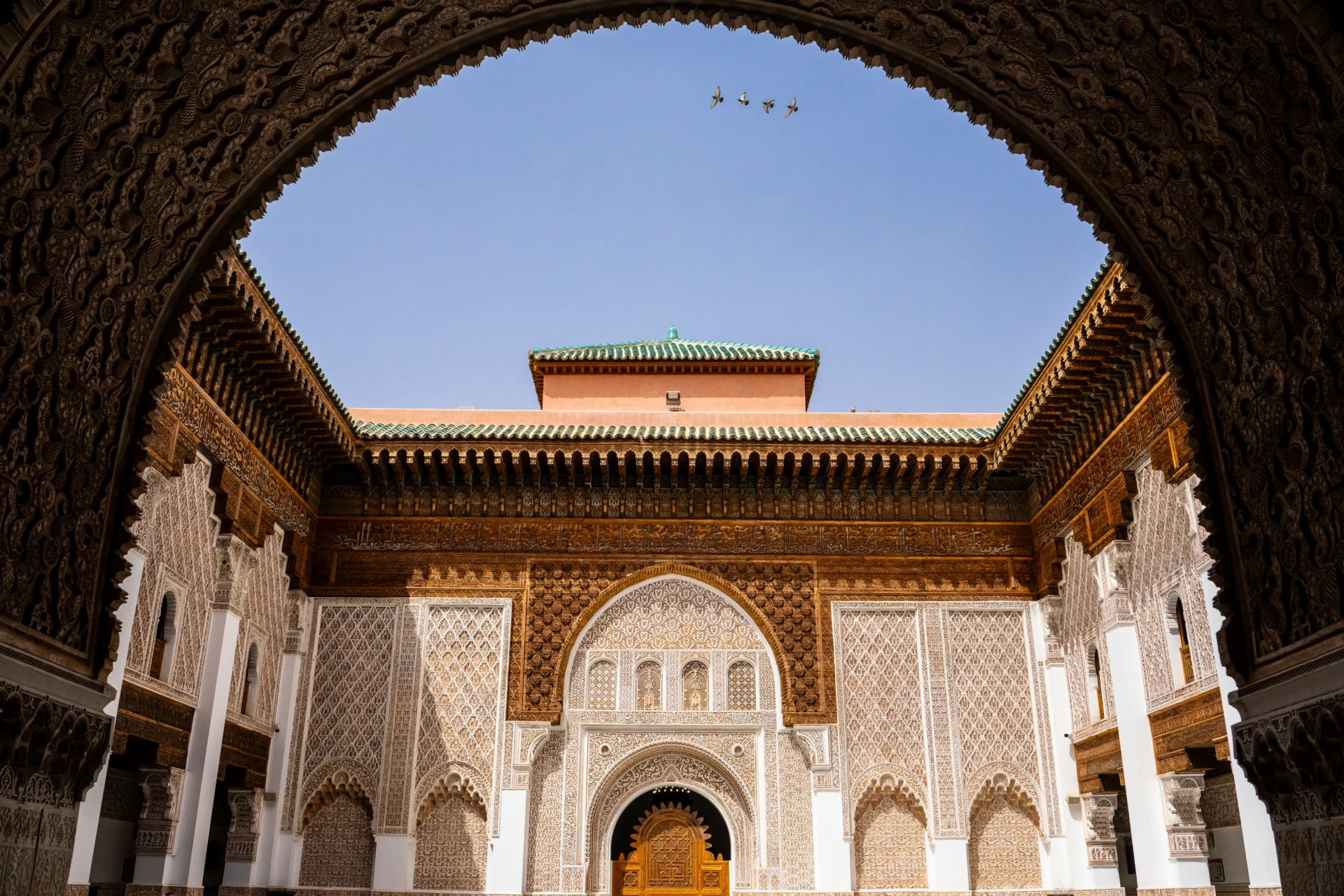
In Marrakech, the Ben Youssef Madrasa shows what the Saadian sultans could do with cedar, stucco and tile. The Koranic school was rebuilt in the 1560s and housed students in small rooms around one of the finest courtyards in North Africa. The medina of Marrakech has been a UNESCO site since 1985.
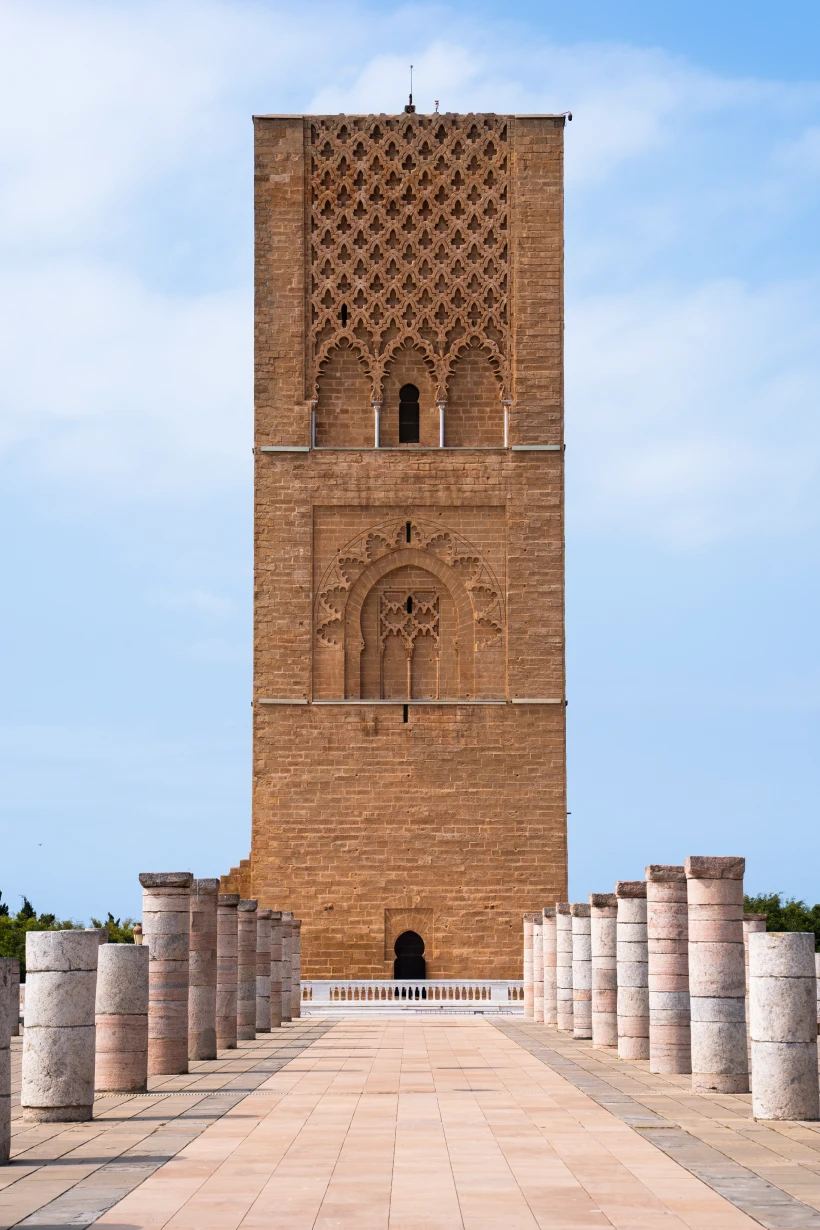
In Rabat, the Hassan Tower is a monument to an ambition that never finished. The Almohad sultan Yaqub al-Mansur began the mosque in 1195, intending it to be among the largest in the world. He died in 1199 and work stopped. The tower and a field of columns are what remain, part of the UNESCO-listed historic city of Rabat.
The best route for the historical sites in Morocco
Strictly chronological is not possible on Moroccan roads, but this order follows the story closely and keeps the long drives to a minimum. Ten to twelve nights covers it comfortably.
| Stop | Era | Drive from previous stop |
|---|---|---|
| Rabat | Almohad, 12th century | About 1 hour from Casablanca airport |
| Volubilis and Meknes | Roman, 1st to 3rd century | About 2.5 hours |
| Fes | Idrisid to Marinid, 8th to 14th century | About 1 hour 15 minutes |
| Sahara (Merzouga) | Caravan routes | 7 to 8 hours, best split over two days |
| Ait Ben Haddou | Ksar, 17th century onward | 6 to 7 hours via the Todra or Dades gorges |
| Marrakech | Almoravid to Saadian | About 4 hours over the Tizi n'Tichka pass |
Our Grand Traverse follows almost exactly this line over 14 days. If you have a week, Imperial Threads focuses on the northern half. For the weather on each stretch, see when to visit Morocco, season by season, and the official Morocco tourism site has background on each region.
Tip
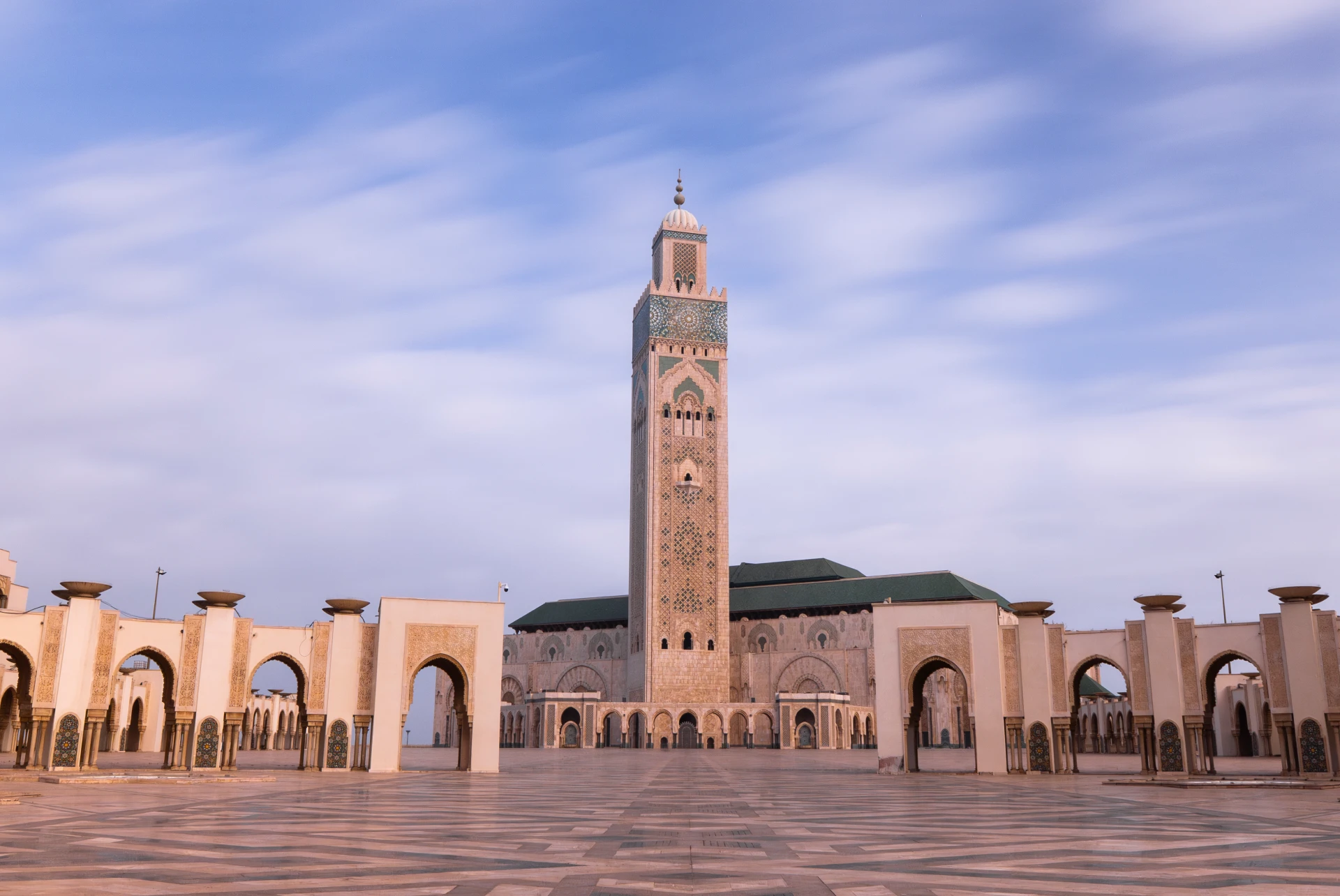
Most mosques in Morocco are open only to Muslims. The exception is the Hassan II Mosque in Casablanca, which runs guided tours for all visitors and is an easy first stop on arrival day.
Frequently asked questions
What are the most important historical sites in Morocco?
Volubilis, the medina of Fes, Ait Ben Haddou, the medina of Marrakech and the historic center of Rabat. All five are UNESCO World Heritage Sites, and they link into a single route of ten to twelve nights.
How many UNESCO World Heritage Sites does Morocco have?
Nine, all of them cultural: the medinas of Fes, Marrakech, Tetouan and Essaouira, Ait Ben Haddou, Meknes, Volubilis, the Portuguese city of El Jadida and Rabat.
Was Gladiator filmed at Ait Ben Haddou?
Yes. Ait Ben Haddou and the studios in nearby Ouarzazate appear in Gladiator, and the ksar also stood in for cities in Lawrence of Arabia and Game of Thrones.
How long do you need at Volubilis?
About two hours with a guide covers the basilica, the triumphal arch and the main mosaic houses. Add an hour for lunch in Moulay Idriss or Meknes.
Is a guide worth it in the Fes medina?
Yes. The medina has more than 9,000 lanes, and a licensed guide shows you the madrasas, tanneries and workshops you would walk past on your own. On our trips the guide is always licensed and booked by name.
Can non-Muslims visit mosques in Morocco?
Most mosques are open only to Muslims. The Hassan II Mosque in Casablanca is the main exception and runs guided tours for all visitors. The madrasas, such as Ben Youssef in Marrakech and Bou Inania in Fes, are open to everyone.
When is the best time for a history-focused trip?
Spring (March to May) and fall (late September to November). Volubilis and Ait Ben Haddou have almost no shade, and summer afternoons inland often pass 100°F (38°C).