
At a glance
- Marrakech averages highs around 65°F in January and close to 100°F in July and August.
- The Sahara is pleasant from October to April and very hot in summer; desert nights can drop near freezing in winter.
- The Atlantic coast stays mild all year, rarely much above 75°F.
- Most rain falls from November to March, mainly in the north and the mountains.
- Snow closes the high Atlas passes on some winter days.
Morocco weather by month varies far more by region than most visitors expect. On the same January day it can be 68°F and sunny in Marrakech, snowing on the Tizi n'Tichka pass and freezing at night in the desert. The table below gives typical conditions; the sections after it explain what they mean for your trip.
| Month | Marrakech high / low | Sahara high | Coast high | Our verdict |
|---|---|---|---|---|
| January | 65°F / 43°F (18°C / 6°C) | 63°F (17°C) | 66°F (19°C) | Bright, cool, quiet |
| February | 68°F / 46°F (20°C / 8°C) | 68°F (20°C) | 67°F (19°C) | Good, almond blossom |
| March | 73°F / 50°F (23°C / 10°C) | 75°F (24°C) | 68°F (20°C) | Excellent |
| April | 77°F / 54°F (25°C / 12°C) | 82°F (28°C) | 70°F (21°C) | Ideal |
| May | 84°F / 59°F (29°C / 15°C) | 91°F (33°C) | 72°F (22°C) | Very good |
| June | 91°F / 64°F (33°C / 18°C) | 100°F (38°C) | 73°F (23°C) | Hot inland |
| July | 99°F / 68°F (37°C / 20°C) | 106°F (41°C) | 75°F (24°C) | Coast and mountains only |
| August | 99°F / 68°F (37°C / 20°C) | 104°F (40°C) | 75°F (24°C) | Coast and mountains only |
| September | 91°F / 64°F (33°C / 18°C) | 95°F (35°C) | 75°F (24°C) | Good from mid-month |
| October | 82°F / 57°F (28°C / 14°C) | 84°F (29°C) | 73°F (23°C) | Ideal |
| November | 73°F / 50°F (23°C / 10°C) | 72°F (22°C) | 70°F (21°C) | Excellent, quieter |
| December | 66°F / 45°F (19°C / 7°C) | 64°F (18°C) | 67°F (19°C) | Cool, festive |
Figures are rounded long-term averages; individual days vary. For live data, Marrakech climate averages on timeanddate.com are a reliable reference.
Winter: December to February
Winter days in Marrakech and the south are usually dry, bright and in the mid-60s°F, which suits walking the medinas. Nights are cold, especially in the desert, where they can approach freezing. Fes and the north are cooler and wetter. Pack a warm jacket and layers.
Spring: March to May
Spring is the most popular season for good reason. The Atlas valleys bloom, the desert is warm by day and mild at night, and every region is comfortable. The rose harvest in the Dades valley comes in early May. Book spring dates well ahead.
Tip
April and October fill first. If those months matter to you, start planning six to nine months ahead.
Summer: June to August
Inland heat is intense from late June, often near or above 100°F in Marrakech and hotter in the Sahara. This is the season for the Atlantic coast, where Essaouira stays in the 70s°F with a steady wind, and for the High Atlas, where valleys are green and nights are cool. If you visit Marrakech in summer, plan the sightseeing for early morning and evening.
Not sure which month suits your trip?
Tell us when you can travel and what you want to see. We will tell you honestly what the weather will be like and adjust the route to it.
Fall: September to November
The heat breaks by mid-September, and October and November bring warm days, cool nights and some of the clearest light of the year. The desert is at its best and the date harvest begins in the southern oases. October is our busiest month.
Rain, snow and desert nights
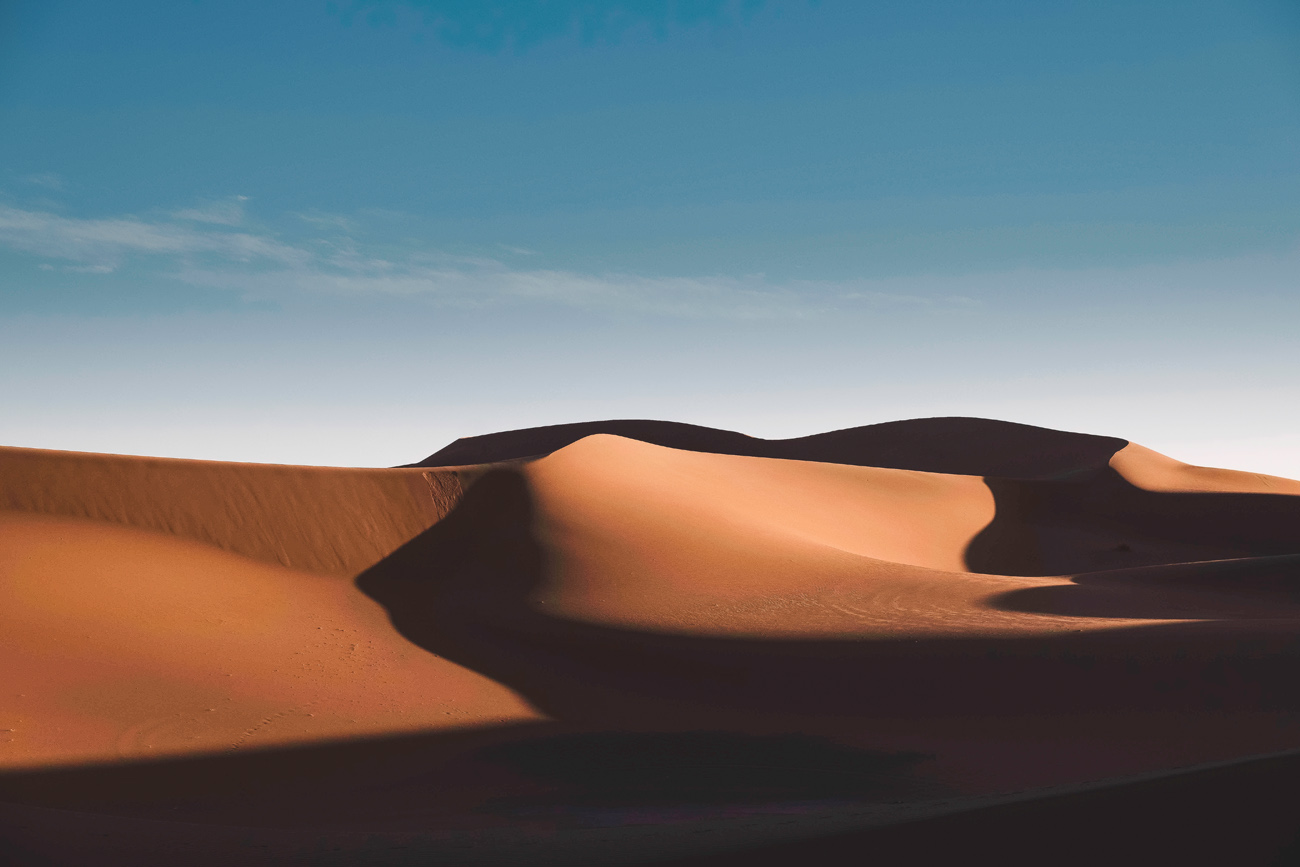
Most rain falls between November and March, mainly in the north, around Fes and Chefchaouen, and in the mountains. Snow covers the high Atlas from December to March and occasionally closes the Tizi n'Tichka pass between Marrakech and Ouarzazate for a few hours; we always keep an alternative route. Desert nights are cold from November to March, and camps provide heavy blankets and fires. Before you leave, check the forecast on the site of Morocco's national weather service.
What to pack by season
- Winter: a warm jacket, sweater and scarf for evenings and the desert.
- Spring and fall: light layers, a light jacket and sun protection.
- Summer: loose, light clothes that cover shoulders and knees, a hat and plenty of sunscreen.
- All year: comfortable walking shoes for the medinas.
For how the seasons shape a whole trip, see when to visit Morocco, season by season and our look at visiting Morocco in 2027.
Frequently asked questions
What is the hottest month in Morocco?
July and August. Marrakech averages close to 100°F and the Sahara often passes 105°F, while the Atlantic coast stays in the mid-70s°F.
Does it rain much in Morocco?
Not in the south. Most rain falls from November to March, mainly in the north and the mountains. Marrakech and the desert are dry most of the year.
Is Morocco cold in winter?
Days are mild in Marrakech and the south, usually in the mid-60s°F, but nights are cold and the desert can approach freezing after dark.
How cold is the Sahara at night?
In winter, nights can drop to about 32°F to 40°F (0°C to 4°C). In spring and fall they are cool and comfortable. Camps provide heavy blankets and fires.
What is the weather like in Marrakech in December?
Usually dry and sunny, with highs around 66°F and lows near 45°F. It is a good month for sightseeing and a busy one around the holidays.
When does it snow in the Atlas Mountains?
From about December to March on the high peaks and passes. Toubkal, North Africa's highest mountain, is usually snow-capped through the winter.
Is the Atlantic coast good for swimming?
The water is cool year-round, around the mid-60s°F at best in late summer. Essaouira is better for walking and kitesurfing than for swimming.