A quick answer, if you are in a hurry
If you have time for only one line: mid-March to early May and late September to early November are the two most reliably beautiful windows for a first visit to Morocco. Days are warm, nights are cool, the Atlas is either flowering or lit in low amber, and the Sahara is perfect for overnight camps. Everything else is a more specific answer, depending on where you want to go.
Spring (March – May): the country at its most flattering
Spring is the classic answer and, most years, the right one. After the short Moroccan winter, the High Atlas valleys fill with almond and apple blossom in March, then with wildflowers, rosemary and wild thyme through April and into May. Marrakech is pleasantly warm (22–28°C), the Atlantic coast is still cool but fresh, and the Sahara is still comfortable for camel treks and overnight camps without the summer heat.
Spring is also when the famous rose harvest happens in the M'Goun valley, around Kelaa M'Gouna, usually in the first two weeks of May. It is one of the few moments in the travel year that is genuinely worth rearranging a trip around.
Watch out for: the weeks around Easter and European school holidays, when the best riads and Sahara camps fill up early. We often ask guests to book peak spring dates four to five months ahead.
Summer (June – August): coast season, inland retreat
Summer in Morocco is a story of two countries. Inland — Marrakech, Fes, the Sahara — daytime temperatures climb steadily from late June, often reaching 38–42°C in the plains and above 45°C on the edge of the Sahara by August. These are not comfortable conditions for walking tours or camel treks, and we will usually try to gently redirect summer travellers.
The Atlantic coast, however, is at its best. Essaouira, Oualidia, Sidi Kaouki and the wilder stretches below Agadir are cool, windy, perfectly clear, and full of Moroccan families on holiday (which is part of the charm). High Atlas walking — above 2,000 metres — is also excellent in July and August, with warm days and cold nights, and trailheads such as Imlil and the Aït Bouguemez valley become viable base camps.
Our summer recommendation: spend as little time as possible in Marrakech city, and as much time as possible on the coast or up in the mountains. If you must be in Marrakech in July or August, choose a riad with a serious pool and treat the midday hours as siesta.
Autumn (September – November): the second golden window
If spring is the country's most flattering season, autumn is its most generous. The heat of August breaks in mid-September. By early October, Marrakech is back down to 26–30°C days and 15°C nights, the imperial cities are at their most walkable, and the Sahara enters what we quietly consider its finest weeks of the year — warm golden days, cool star-heavy nights, and an air so clean you can see the Erg Chebbi dunes from fifty kilometres away.
October and early November are also when the date harvest happens in the Draa valley oases, and when the olives are pressed in the argan belt — small, quiet, delicious moments that most itineraries ignore and we love to include.
Watch out for: occasional first rains from late October in the north (Tangier, Chefchaouen, Fes) and in the High Atlas passes. They rarely disrupt a trip but they are worth planning around.
Winter (December – February): the Sahara's quiet secret
Most travellers assume Morocco is too cold in winter. They are almost entirely wrong. December to February is a fascinating, underrated window — and it is the season we choose for our own family trips.
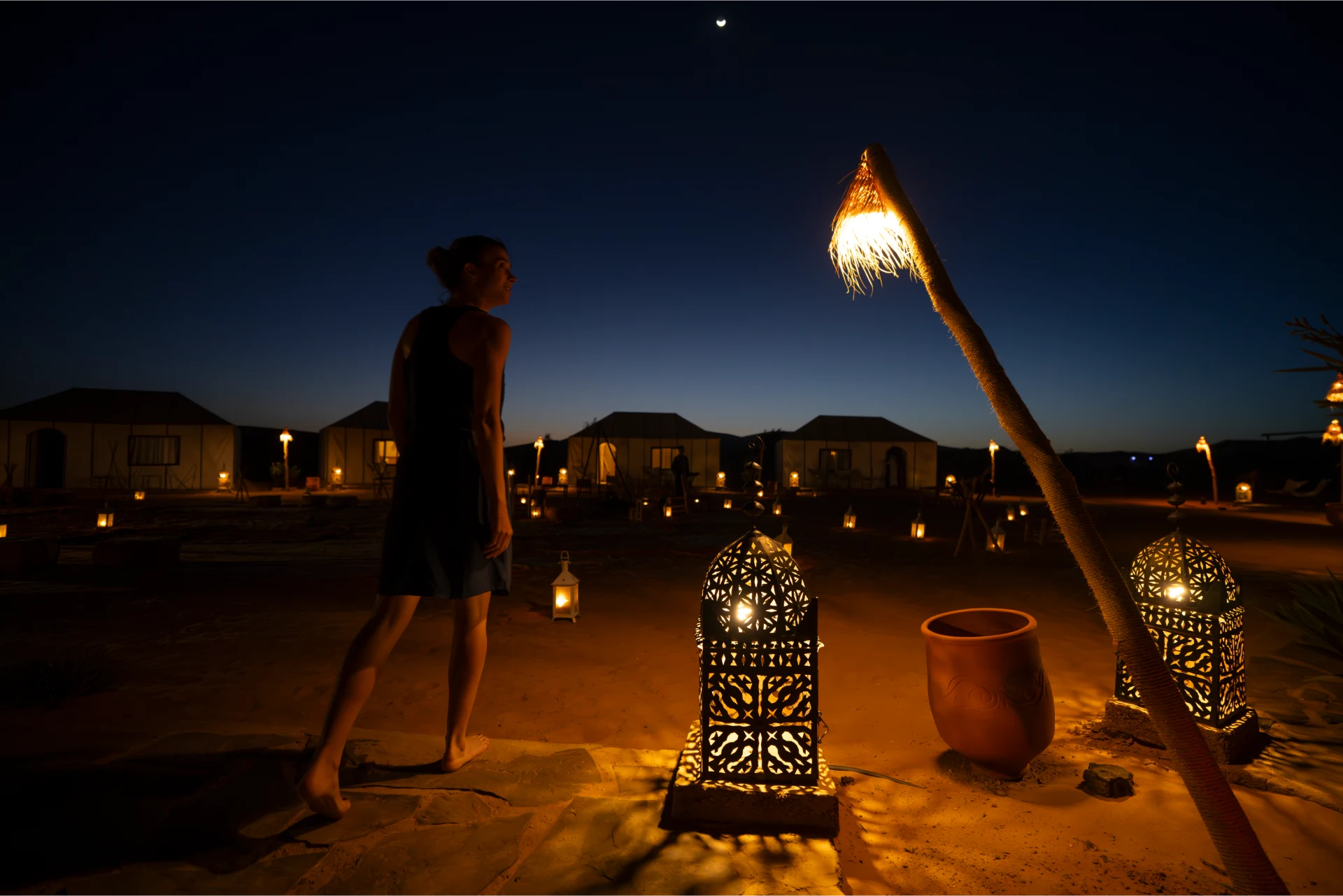
Marrakech and the southern kasbah route (Ouarzazate, Skoura, the Draa valley) have bright, dry, cool days (18–22°C) and cold nights. The Sahara is at its most atmospheric: you can sit around the fire in the dunes under a sky so full of stars it is almost noisy, and the nights are cold enough to justify the heavy camel-hair blankets that the camps always provide. The High Atlas, meanwhile, is genuinely snowy — Oukaïmeden has a small ski station, and the panorama from the Tizi n'Tichka on a clear January morning is one of the great sights of North Africa.
Fes, Chefchaouen and the north can be damp and cold in January and February — pack properly — but the medinas are beautifully empty, the riad fireplaces are lit, and the food (harira soup, bisara, tanjia, steaming glasses of mint tea) suddenly makes complete sense.
Watch out for: the week around Christmas and New Year, when prices climb and the best Sahara camps book up. January and most of February, however, remain quietly magnificent and surprisingly good value.
Region by region, in one table
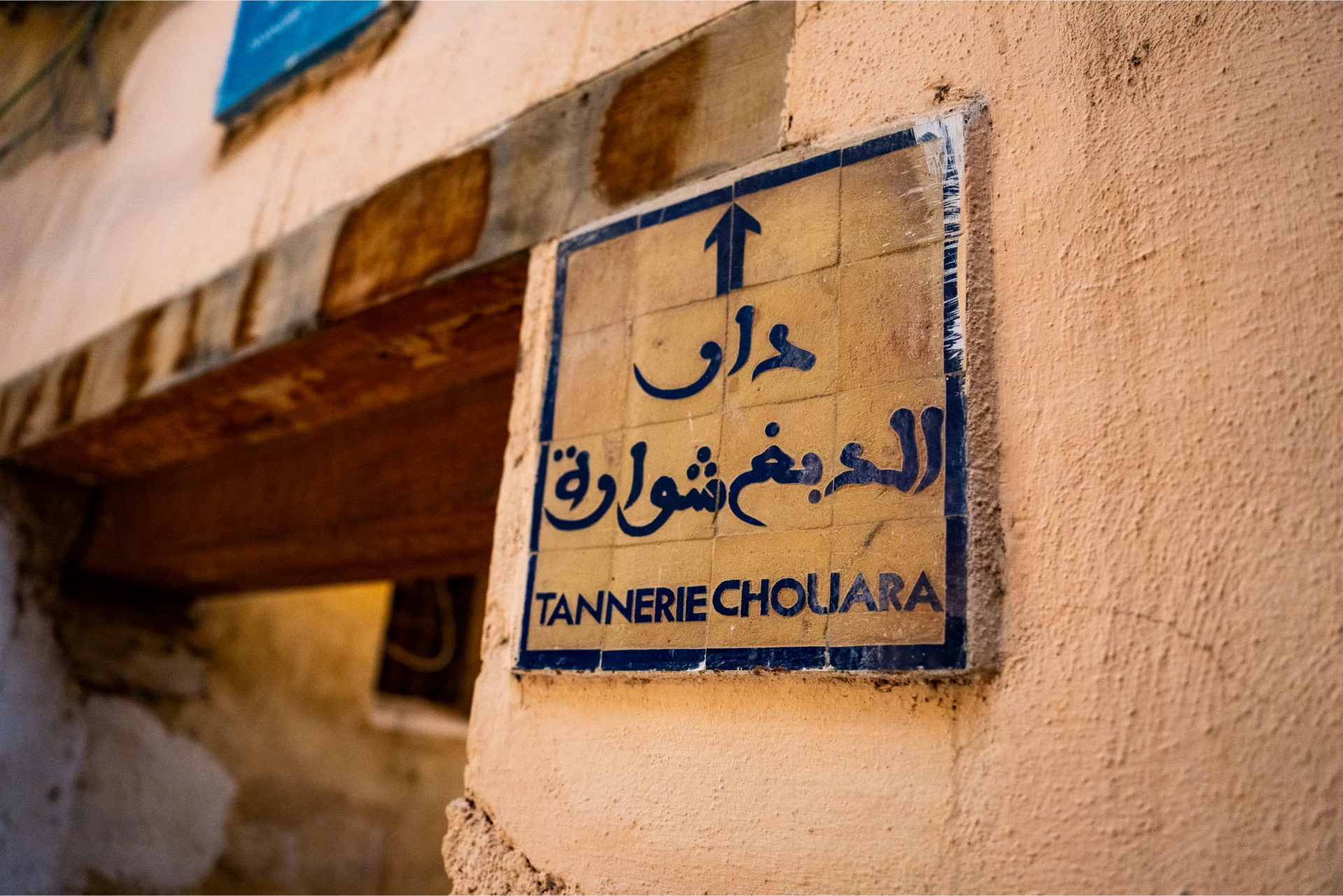
If you still need a quick planner, here is a rough guide to the best months by region. Marrakech: March–May and October–November (January also excellent). Fes and the imperial cities: April–May and September–October. Sahara (Merzouga, M'hamid): late September to early May; avoid June–August. High Atlas trekking: April–June and September–October; summer for high routes only. Atlantic coast (Essaouira, Oualidia): May–September. Chefchaouen and the north: April–June and September–October.
A note on Ramadan
Ramadan moves about eleven days earlier each year on the Gregorian calendar. In 2026 it falls roughly from mid-February to mid-March, and in 2027 it begins in early February. Travelling during Ramadan is entirely possible and in some ways beautiful — evenings take on a quiet, communal warmth that is unique in the Islamic world — but daytime service in smaller towns slows, and guides, drivers and riad staff are fasting. We always tell guests in advance and let them decide. Many of our favourite guests specifically ask to travel during Ramadan, year after year.
How we help you choose
There is no perfect month in the abstract — only the right month for the kind of trip you actually want. If you tell us what you want to see, how you want to move, and when you have time off, we will tell you honestly when to come — and when not to. The right answer is sometimes not the month you first had in mind, and that is exactly the conversation we enjoy most. When you are ready, write to us and we'll start shaping it together.